


Skip to content
OMVIANTECHOMVIANTECH
Cloud Solutions · Lucknow

Cloud Solutions Company in Lucknow

AWS, Azure, private and hybrid cloud — containerised, observable, cost-controlled, and portable enough to leave. For Lucknow, that most often means government and healthcare — the administrative capital of Uttar Pradesh and our engineering base.

  • Senior engineers, not a handover to juniors
  • Source code and infrastructure handed over
  • Support arrangement with defined response times
Lucknowthe administrative capital of Uttar Pradesh and our engineering base

What cloud solutions actually means in Lucknow

Most Lucknow cloud conversations end up at hybrid rather than migration, and for good reasons: residency rules that keep records local, institutional workloads that spike violently around admissions and results, and connectivity that is good rather than guaranteed. The useful engineering is deciding what genuinely benefits from being elastic and leaving the rest where it is.

Cloud Solutions in Lucknow

Why Lucknow organisations come to us for this

Lucknow runs on government and institutional spending, a dense private healthcare and education sector, and a fast-growing services economy around Gomti Nagar and the Sushant Golf City corridor. Manufacturing sits mostly on the Amausi and Chinhat belts, while the older trading economy of Aminabad and Chowk still moves serious volume through largely manual systems.

For businesses with unreliable local connectivity, a wholesale move to cloud is often the wrong answer. Hybrid — local systems that keep working offline, cloud for reporting and reach — is usually the design that survives contact with reality.

Because so many Lucknow organisations answer to a regulator, a board or a state department, the recurring requirement is auditability — systems that can show who approved what, and when. That pushes buyers here toward custom platforms and on-premise deployments far more often than toward generic SaaS.

Areas we work across in Lucknow

  • Hazratganj
  • Gomti Nagar & Vibhuti Khand
  • Sushant Golf City
  • Indira Nagar
  • Aliganj
  • Aminabad & Chowk
  • Amausi Industrial Area
  • Chinhat Industrial Area
Industries

Cloud Solutions for the sectors that drive Lucknow

Ordered by what the Lucknow economy actually runs on, not by our own preference.

Government

Constraints come first

Empanelment, residency and on-premise mandates usually decide the deployment before technical preference gets a say. The engineering work is delivering a modern, containerised, observable environment inside those constraints rather than arguing with them.
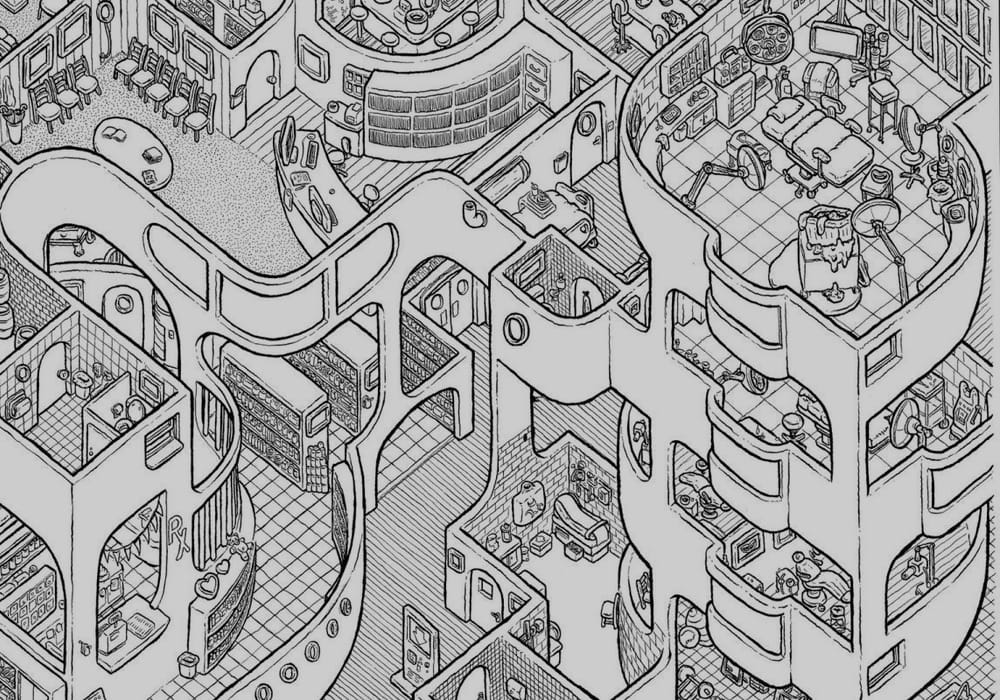

Healthcare

Uptime is clinical

Records have to be reachable at 3am, so redundancy and a recovery objective you have actually tested matter more than cost optimisation. Residency requirements frequently push the sensitive workloads onto local or private infrastructure regardless of preference.

Education

Load that arrives all at once

Admissions, examinations and results generate enormous short spikes against months of near-idle capacity. This is the workload elastic infrastructure genuinely suits — and a rare case where the cost argument for cloud is unambiguous.

See how we work across all nine industries

Scope

What cloud solutions covers

Cloud spending grows quietly. An architecture that made sense at launch keeps running long after the workload changed, and the bill becomes a fixed cost nobody can fully explain.

Architecture & migration

A migration plan with a rollback path, sequenced so nothing critical moves without a way back.

Containerisation

Docker and Kubernetes workloads that deploy identically across environments and stay portable.

Infrastructure as code

Environments defined in version control, reproducible rather than assembled by hand in a console.

Observability

Metrics, logs, tracing and alerting configured so failures are noticed internally first.

Cost optimisation

Right-sizing, reserved capacity and lifecycle policies, with spend attributable to workloads.

Backup & recovery

Backups with a tested restore procedure and a recovery objective you have agreed, not assumed.

We design and run cloud infrastructure with cost and observability as first-order concerns: containerised workloads, infrastructure defined as code, monitoring that tells you about a problem before a user does, and a bill you can attribute to specific services.

We also build for hybrid, because that is what many organisations here actually need — sensitive workloads and data on-premise, elastic and public-facing workloads in the cloud, one operating model across both.

Outcomes

What changes after go-live

  • Infrastructure reproducible from version control
  • A cloud bill you can explain line by line
  • Failures detected before customers report them
  • A restore procedure that has actually been tested

Technologies we build on

  • AWS
  • Azure
  • Docker
  • Kubernetes
  • Terraform
  • PostgreSQL
  • Redis
  • Cloudflare

We are vendor-neutral. The stack follows the requirement — including the parts of it you already run.

Engagement

How a cloud solutions project runs

  1. 01

    Audit before proposal

    What is running, what it costs, what is exposed and what has no working backup. This regularly changes the brief, and occasionally it is the whole engagement.

  2. 02

    Migration plan with a rollback path

    Sequenced so nothing critical moves without a documented way back. The rollback stays available until the new environment has proven itself.

  3. 03

    Phased migration

    Workload by workload, during agreed low-traffic windows, with a rehearsed cut-over rather than a hopeful one.

  4. 04

    Cost review at 60 days

    Real spend against the estimate, with right-sizing applied once actual usage — rather than a guess about it — is visible.

What we need from you

  • An inventory of current servers, services and what depends on what
  • Cloud account access, or authority to create one
  • Your genuine recovery expectations — how much downtime and data loss is survivable
  • Peak load figures, if you have them, or traffic logs if you do not

None of it has to be tidy. Discovering that your data is messier than expected is part of the job, not a reason to delay starting.

Delivery

How the engagement runs

  1. 01

    Discovery

    Understand goals, constraints and success metrics.

  2. 02

    Business Analysis

    Map processes, data and integration surface.

  3. 03

    UI / UX

    Design intuitive, accessible enterprise interfaces.

  4. 04

    Architecture

    Design for scale, security and future backend.

  5. 05

    Development

    Build in modular, reviewed increments.

  6. 06

    Testing

    Automated, security and acceptance testing.

  7. 07

    Deployment

    Ship to cloud, private cloud or on-prem.

  8. 08

    Support

    Long-term partnership, SLAs and iteration.

Working with us in Lucknow

Lucknow is where our engineers sit, so work here runs with on-site discovery workshops, in-person UAT and same-day support visits when something needs hands on a machine.

FAQ

Cloud Solutions Company in Lucknow — questions

The Lucknow-specific questions first, then the ones that come up on any cloud solutions project.

Our data has to stay in India, or in our building. Does that rule out cloud?

No, but it constrains the design. Indian regions cover residency for most requirements, and where the rule is stricter the sensitive workloads stay on your own hardware while reporting and public-facing services run in the cloud. Hybrid is a legitimate destination, not an unfinished migration.

Our systems are idle most of the year and overloaded for two weeks. Can that be fixed?

That is the workload cloud genuinely suits, and one of the few cases where the cost argument is unambiguous. We size and load-test against the peak rather than the average, so results or admissions week runs on capacity that was provisioned for it.

Should we move everything to the cloud?

Usually not everything. Workloads with strict data-residency requirements, heavy predictable load, or a dependency on local connectivity often belong on-premise. Hybrid is a legitimate destination, not a halfway house someone failed to finish.

How do you control cloud costs?

By making spend visible per workload, right-sizing against actual usage rather than initial guesses, using reserved capacity for steady load, and applying lifecycle policies to storage. Most surprising bills come from resources nobody remembers provisioning.

Can you manage infrastructure we already have?

Yes. We take over existing environments regularly. The first step is an audit — what is running, what it costs, what is exposed and what has no backup — before changing anything.

What about downtime during migration?

It is planned for explicitly. Migrations run with parallel environments and a rehearsed cut-over during a low-traffic window, with a rollback path that stays available until the new environment has proven itself.

Where is OMVIANTECH located in Lucknow?

We operate from Lucknow, Uttar Pradesh, and this is our only physical engineering base — every project across the state is delivered from here. Send an enquiry through the contact form and we will share the office address and arrange a meeting.

Can you deploy software on-premise for a government or public-sector body in Lucknow?

Yes. A large share of our Lucknow work is on-premise precisely because departmental and regulated buyers cannot place records on third-party cloud. We deploy to your own servers, run private LLMs locally where AI is involved, and hand over the infrastructure documentation with the system.

Do you work with Lucknow healthcare and education institutions?

Yes — hospital and diagnostic workflows, and institutional ERP covering admissions, attendance and fee reconciliation, are two of our steadiest lines of work in the city. Both are areas where the process detail varies enough between institutions that off-the-shelf packages usually need heavy customisation anyway.

Cloud Solutions for your Lucknow operation

Send us the problem in your own words. We will come back with what it takes, what it costs, and whether you actually need it.