


Skip to content
OMVIANTECHOMVIANTECH
Software

Software Development Company

Custom business software built around how your organisation actually works — not around a package you have to bend to fit.

  • 18 cities served across Uttar Pradesh
  • Senior engineers on delivery
  • Handover includes source and infrastructure
Overview

Where software development is worth doing properly

Most organisations do not start out wanting custom software. They start with a package, add spreadsheets around the gaps, then add a person whose job is partly to move data between the two. Custom development becomes the right answer at the point where the workarounds cost more than the software would.

We build line-of-business systems end to end: requirement discovery with the people who will use the thing, a data model that reflects your actual process, a working increment early enough to correct course, and a deployment you own. The result is a system your team recognises, because it was designed around what they already do.

We are equally willing to tell you not to build. If a packaged product covers your process, saying so costs us a project and saves you a great deal of money — and it is the reason the clients who do build with us stay.

Typical engagement shape

  • Paid discovery producing a costed scope
  • Working increments you can steer
  • Parallel run before cut-over
  • On-site training and written handover
  • Support arrangement after go-live
Scope

What we deliver

Discovery & process mapping

On-site sessions with the people doing the work, not just the people commissioning it. Output is a written process map and a scope you can hold us to.

Architecture & data model

The part that decides whether the system is still useful in five years. Documented, reviewed with you, and designed for the integrations you will want later.

Incremental delivery

Working software in reviewable increments, so you see and steer the system while it is still cheap to change.

Migration & cut-over

Master and transaction data brought across, a parallel run through a full cycle, and a planned cut-over rather than a hopeful weekend.

Training & handover

On-site training on the real workflow, written documentation, and source code and infrastructure handed over as yours.

Long-term support

A defined support arrangement after go-live, because the month after launch is when a system either embeds or gets abandoned.

Outcomes

What you should expect to change

  • One system of record instead of a package plus six spreadsheets
  • Reports that reconcile without a manual pass at month end
  • Process changes shipped in days, not vendor release cycles
  • Code and infrastructure you own outright, with no licence lock-in

Technologies we build on

  • TypeScript
  • Next.js
  • React
  • Node.js
  • Python
  • Laravel
  • PostgreSQL
  • MySQL
  • Redis
  • Docker

We are vendor-neutral. The stack follows the requirement — including the parts of it you already run.

Industries

Software Development across industries

The sectors where this work most often lands, and what specifically changes for each.

Manufacturing

Three systems that disagree

Production, stock and costing are usually maintained separately, and they never quite reconcile. The work is getting shop-floor movement captured once, at the point it happens, so that consumption, wastage and costing all derive from the same record instead of three people counting differently.

Healthcare

One record, end to end

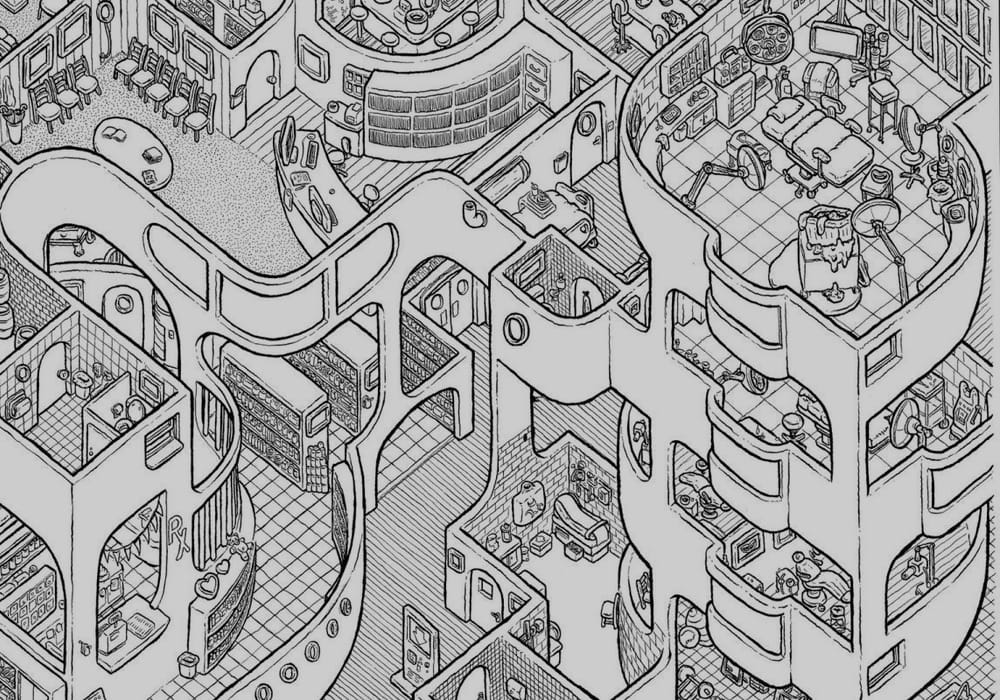
Registration, consultation, diagnostics, pharmacy and billing are frequently four systems joined by paper. Consolidating them means a patient record that holds together, and an edit history showing who changed what — which matters the day a bill or a report is questioned.

Retail

Where the stock actually went

Multi-counter operations lose margin in the gap between purchase, sale and physical stock. A system that decrements accurately at the till, handles your scheme and discount logic properly, and surfaces variance daily turns an annual write-off into a solvable weekly question.

Finance

Built for the audit

Approval trails, maker-checker separation and immutable transaction history are not features to add later — they are decisions in the data model. Retrofitting an audit trail onto a system that overwrites records is expensive and never fully convincing.

Education

The fee logic nobody gets right

Admissions and attendance are broadly standard. Fee handling is not: instalments, sibling discounts, scholarship adjustments and part-payments differ at every institution. It is the module packaged products fit worst, and the one the accounts office fights with daily.

Construction

Project-wise, not company-wise

Material issued to a site, subcontractor running bills, BOQ against actual consumption and retention amounts all need to be visible per project. Rolled up at company level they hide exactly the overrun you needed to catch while it was still small.

See how we work across all nine industries

Engagement

How a software development project runs

  1. 01

    Paid discovery, 2–4 weeks

    Fixed price. Produces a written process map, an architecture note and a costed scope. If you take that document to another firm instead, that is a legitimate outcome and we will not argue about it.

  2. 02

    Build in reviewable increments

    Priced per phase against the discovery scope, with a working release you can use at the end of each. You steer while steering is still cheap.

  3. 03

    Changes re-estimated in writing

    Scope changes are quoted before the work starts, not absorbed quietly and billed at the end. It slows some weeks down and it prevents the argument that otherwise arrives at invoice time.

  4. 04

    Support after go-live

    A monthly retainer with defined response times, or hourly if your volume is genuinely low. We will tell you which one your usage justifies.

What we need from you

  • Access to the people who do the work daily, not only the people commissioning it
  • Sample documents, reports and exports from whatever you run today
  • A named decision-maker who can settle scope questions within a day or two
  • Any compliance, audit or client-security requirements the system has to satisfy

None of it has to be tidy. Discovering that your data is messier than expected is part of the job, not a reason to delay starting.

Delivery

How the engagement runs

  1. 01

    Discovery

    Understand goals, constraints and success metrics.

  2. 02

    Business Analysis

    Map processes, data and integration surface.

  3. 03

    UI / UX

    Design intuitive, accessible enterprise interfaces.

  4. 04

    Architecture

    Design for scale, security and future backend.

  5. 05

    Development

    Build in modular, reviewed increments.

  6. 06

    Testing

    Automated, security and acceptance testing.

  7. 07

    Deployment

    Ship to cloud, private cloud or on-prem.

  8. 08

    Support

    Long-term partnership, SLAs and iteration.

FAQ

Software Development — frequently asked

Straight answers, including the cases where our answer is that you should not buy this from us.

How much does custom software cost?

It depends almost entirely on scope, and anyone who quotes before understanding your process is guessing. What we can commit to is a fixed price for a paid discovery phase that produces a process map, an architecture note and a costed scope — after which you can take that document elsewhere if you want to.

Who owns the code?

You do. Source code, database schema and deployment configuration are handed over as part of delivery. We do not hold systems hostage through access, and you are free to take the codebase to another team.

What happens if we need changes after launch?

They are expected — a system that never changes is usually one nobody uses. We work on a support and enhancement arrangement after go-live, with a defined response commitment rather than best-effort availability.

Can you work alongside our existing systems?

Yes, and that is the common case. Most builds integrate with an accounting package, an existing database or a third-party API rather than replacing everything. Replacing a working system for the sake of tidiness is rarely worth it.

Locations

Software Development by city

Each page covers local context — the sectors, the constraints and the questions specific to that market.

Thinking about software development?

Describe the problem in your own words. We will tell you what it takes to solve — and whether it is worth solving this way.